
Gold Standard, Exposed
An evidence-based breakdown of Canada’s roster gaps and the roadmap back to gold.

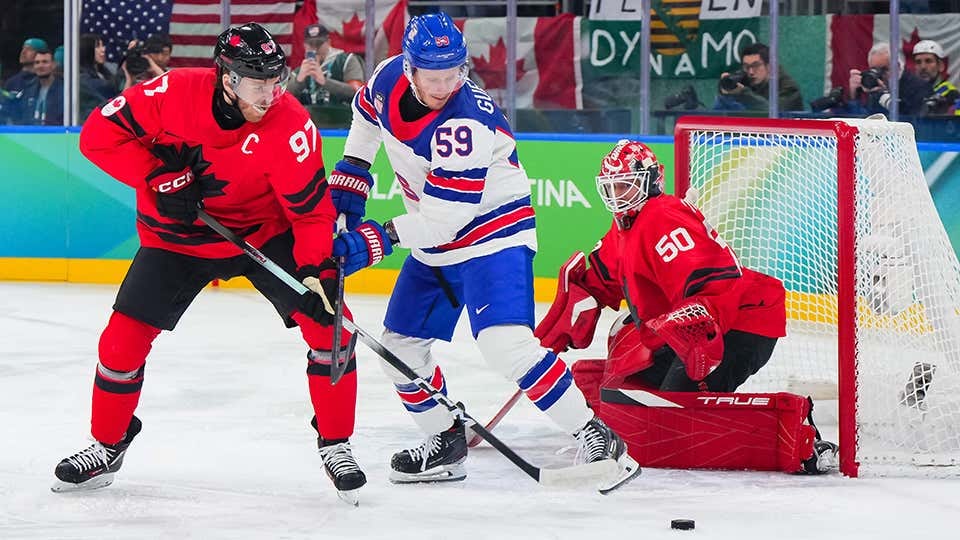
Now that the dust has settled on an all-time classic gold medal game between Canada and the United States, it feels like the right time to take a step back and look at how Canada built this roster. Unlike most Olympic teams, Canada and the U.S. aren’t questioned for their talent level. They’re questioned for their choices. When nearly 70% of the NHL player pool comes from those two countries, cutting that down to 25 players is less about finding good players and more about building the right mix.
From the start, there were some clear structural concerns with Team Canada, especially on the blue line. The balance of skill sets didn’t fully match what the modern international game demands, and that became more noticeable as the tournament went on. By the medal round, issues with role fit, puck movement, and matchup flexibility were hard to ignore. In my view, those roster decisions were a major factor in both Canada’s late-tournament struggles and the final result.
The Canadian blue line did not play poorly. In fact, none of the seven defensemen who saw regular minutes “lost“ Canada a game. If anything, the group exceeded expectations in how often they activated and helped generate offence.
The problem was what happened after those plays were created. Canada lacked enough defensemen who could either finish those chances themselves or consistently move the puck up ice with pace and control. In a tournament where transition speed and clean exits were critical, that limitation became more apparent as the competition tightened.
Both of these issues were predictable and, more importantly, avoidable. Canada leaned toward safer, lower-risk profiles on the back end, and that conservative approach ultimately reduced their ability to play the fast, possession-driven game that has defined recent international success.
Cale Makar was clearly the offensive driver of the group. He led Canadian defensemen in points (6), goals (2), chance creations (15), and total chance contributions (26). Much of Canada’s blue line offence ran through him. Thomas Harley also had a solid tournament, finishing second among Canadian defensemen in points, chances, and overall contributions.
Shea Theodore graded out as Canada’s third-most productive offensive defenseman, recording 12 chance contributions and two points. However, his limited minutes held him back from possibly being a bigger contributor. He averaged 13:18 per game, ranking sixth among Canadian defensemen in total minutes, essentially rotating on the third pair with Doughty (13:17) and Sanheim (13:14).
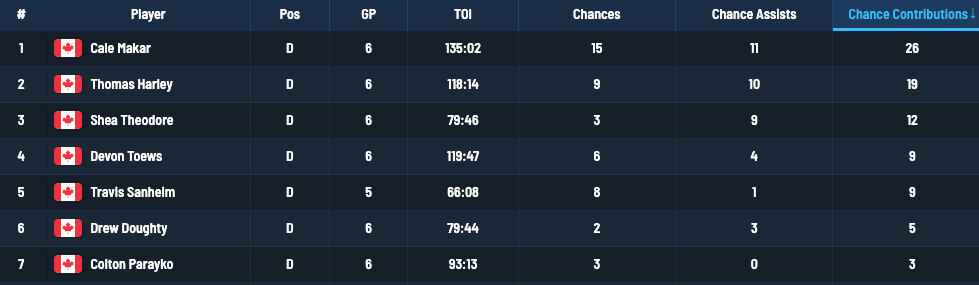
The issue was not Theodore’s role. The issue was depth. Once Josh Morrissey went down early in the opening game, Canada no longer had a second high-end puck mover who could consistently transport the puck, extend possessions, and support the attack. From that point on, the offensive burden fell almost entirely on Makar, which made Canada’s transition game more predictable and easier to pressure. The frustrating part is that a similar situation came up at the end of the 4 Nations tournament last year, but wins can hide blemishes better than anything.
The lack of blue line creation became especially noticeable in Canada’s 3–2 semifinal win over Finland. Travis Sanheim led all Canadian defensemen in chance contributions and recorded three slot attempts in that game. He finished with no goals and a single assist on Theodore’s tally.
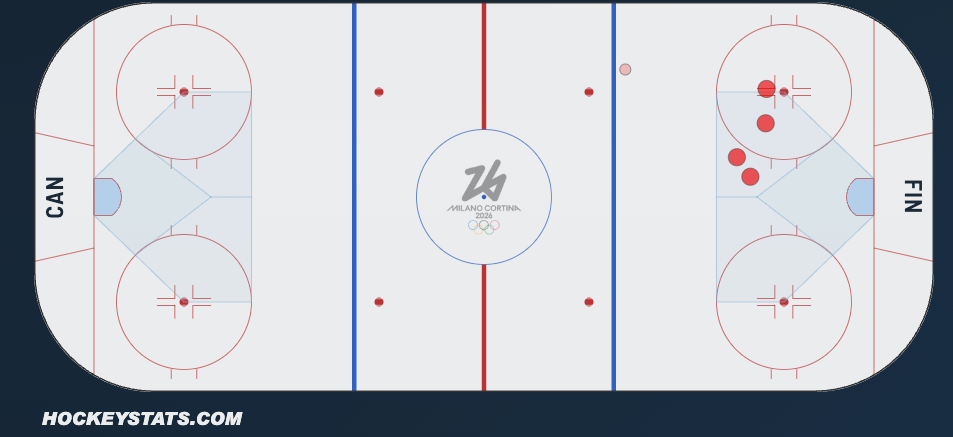
This isn’t a criticism of Sanheim. In fact, it was likely his strongest performance of the tournament. But that’s exactly the point. When a defenseman whose primary profile is not as a high-end offensive driver is leading your blue line in chance creation, it highlights a structural imbalance. Canada was generating looks from the back end, but not consistently through players best suited to convert or extend those sequences.
A tweet from Thomas Drance during that game captured this dynamic perfectly.

So what could Canada have done differently?
Matthew Schaefer is one of the most obvious answers. The 18-year-old is currently fourth among defensemen in goals and 12th in points, while also ranking 13th in shooting percentage among blueliners with at least 500 minutes played. That kind of production profile is exactly what Canada lacked once Morrissey went down.
The primary concern around Schaefer was experience. There was understandable hesitation about bringing a teenager into a high-pressure, short tournament. But we’ve just watched Macklin Celebrini step into the Olympics and turn into Canada’s second-best forward, and that should change how Hockey Canada evaluates elite young talent. At a certain point, impact and skill set have to outweigh age, especially in a best-on-best environment where transition speed and offensive support from the blue line are essential.
If the preference was for a more established NHL option, Evan Bouchard was the obvious choice.
Over the past season and a half, Bouchard ranks fourth among NHL defensemen in both goals and total points. He also brings exactly the kind of big-game résumé Hockey Canada prioritized. Across the last two postseasons, Bouchard leads all defensemen in goals and points per 60 minutes at both even strength and in all situations. His even-strength playoff production sits at 2.07 points per 60, a full tier above the next-best defenseman at 1.48. Among elite comparables, Makar ranks seventh at 1.31.
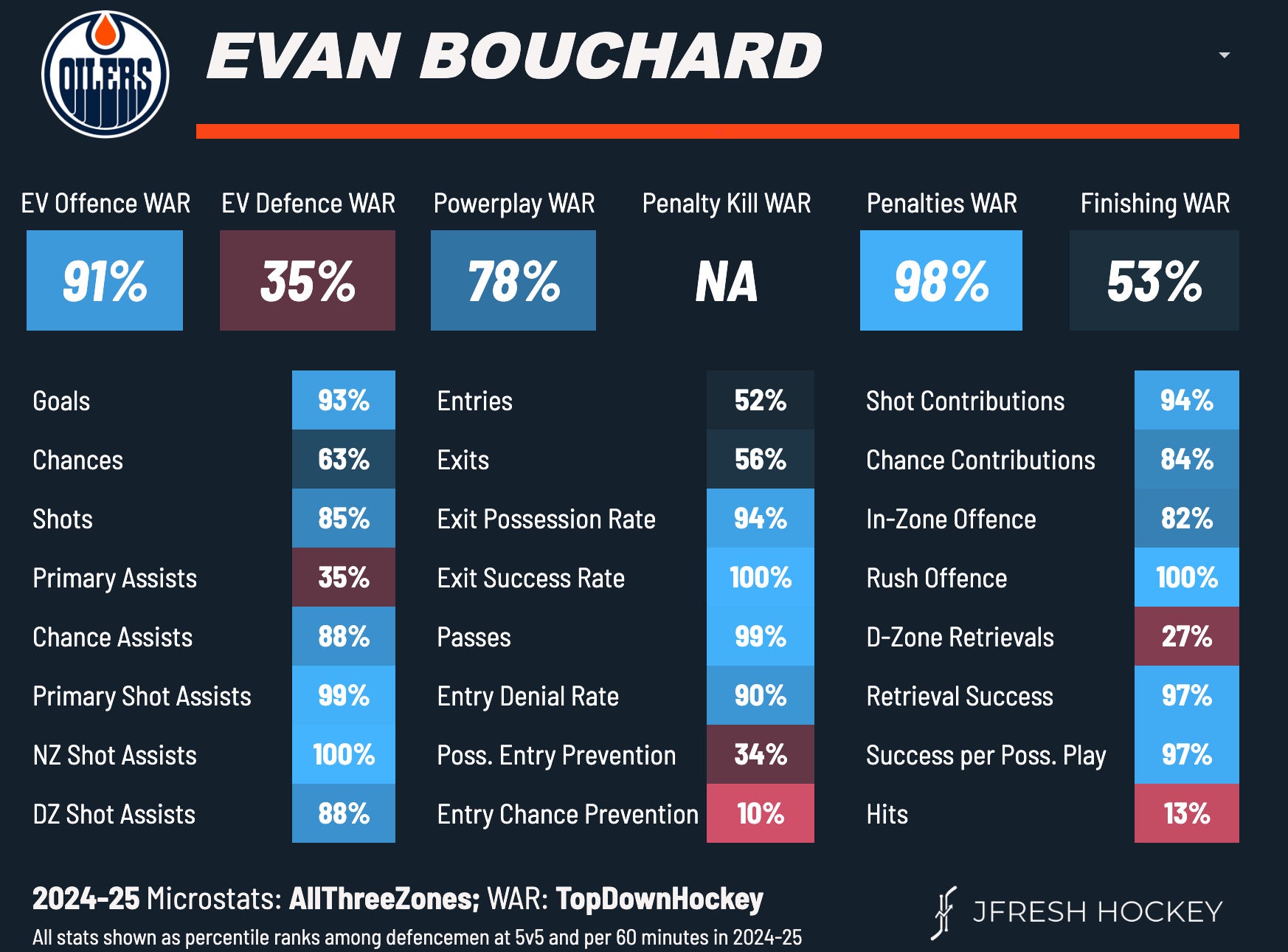
The common pushback is that Connor McDavid inflates Bouchard’s numbers. This isn’t a theory I fully buy into, but in an Olympic setting, that argument actually works in Canada’s favour. They could have deployed Bouchard and McDavid together in offensive-zone situations, maximizing a proven chemistry that already drives elite playoff production.
Defensively, Bouchard has limitations. But the Olympic format allows teams to dress seven defensemen, which makes sheltering a specialist far easier. Canada could have managed his minutes, leaned on him for offensive deployments, and reduced his usage once protecting a lead. Instead, they opted for safer, lower-ceiling profiles and left a high-impact offensive weapon at home.
Even beyond Schaefer and Bouchard, Canada had several more balanced options available. Noah Dobson is a strong puck mover who can run a power play and play heavy minutes in transition. MacKenzie Weegar offers strong defensive results while still moving the puck efficiently and supporting possession. Jakob Chychrun, who currently leads all NHL defensemen in goals, brings a shooting threat from the back end that Canada simply did not have outside of Makar.
None of these players are one-dimensional specialists. Each combines puck movement with either offensive finishing or strong defensive impacts. More importantly, they represent skill sets that better align with the pace and transition demands of the international game.
Were there issues elsewhere in the lineup? Absolutely. The decision to take Sam Bennett over Connor Bedard was difficult to justify, especially with Marchand and Wilson already filling the physical, forechecking roles. With Brayden Point unavailable, Canada was short on high-end secondary scoring, and Bedard’s shooting talent could have addressed that immediately.
That said, the blue line is where the most meaningful changes are needed. Teams consistently clogged the middle of the ice when Canada had offensive-zone possession, forcing play back to the point. In those situations, Canada didn’t have enough defensemen who could either get pucks through traffic, attack downhill, or quickly reset the cycle to maintain pressure.
Canada does not have a talent problem. It has a roster construction problem. The international game is faster, more transition-driven, and increasingly reliant on puck-moving defensemen who can extend possessions and contribute offensively. Without that layer, even a high-skill forward group becomes easier to contain.
Canada will get another opportunity to reclaim a world title in 2028. The key question is whether this loss is treated as a learning moment or dismissed as a result of being “one goal away.” The margin at this level is always one goal. The process behind how you build the roster is what determines which side of that margin you end up on.
Stat cards and shot charts from Hockeystats.com